







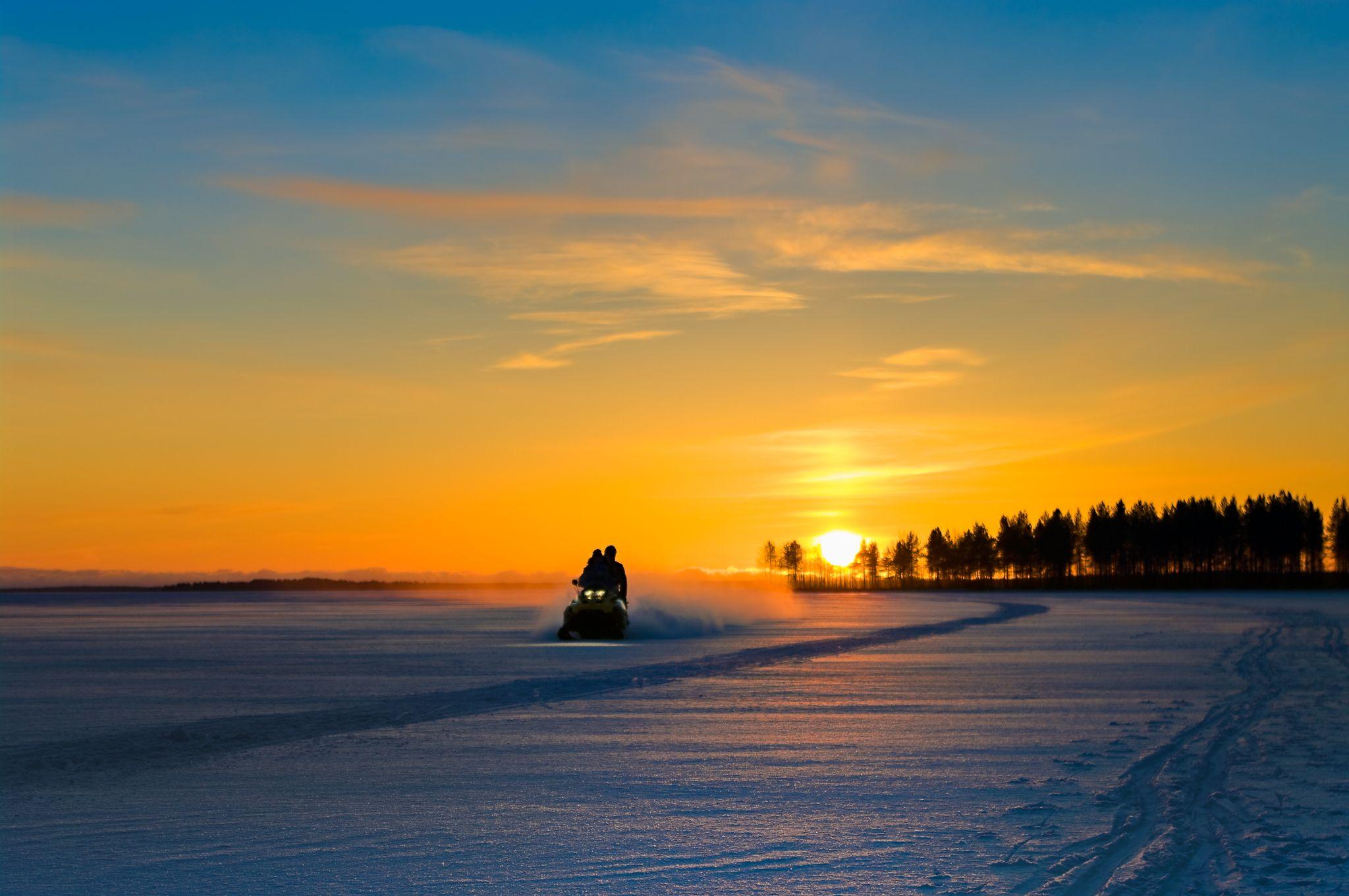
When you’re snowmobiling at night, the rules change. Darkness limits how far you can see and makes depth and contrast hard to judge.
While snowmobiles are mostly used for recreation, many riders also depend on them when roads are buried or winter storms make travel impossible. In Alaska, you’ll often hear them called snowmachines. No matter what you call them or what you’re using them for, safe night riding depends on visibility, preparation, and restraint.
Know Your Limits and Terrain
Stick to marked or groomed trails and avoid open terrain or ungroomed routes where hazards may be hidden under the snow. Marked trails are maintained for safety and often have posted speed limits and curfews.
Before heading out, check trail conditions and local regulations. Many areas enforce sound restrictions or nighttime closures. Share your ride plan with someone who isn’t going, and include your expected return time. Keep an offline map or GPS with stored waypoints in case you lose signal.
Managing Speed and Sight Distance
Your headlight is your lifeline after dark, but it only illuminates about 200 feet in front of the sled. For example: at 40 miles per hour, a snowmobile travels about 88 feet before you even begin braking and another 70 feet to stop. That leaves only 40 feet of margin to avoid obstacles. At 50 miles per hour, the reaction and braking distance increase to about 190 feet, leaving almost no room for error.
To avoid overdriving your headlight, ride slower than 30 mph when your high beam reaches about 200 feet. On icy or hard-packed trails, or during falling snow, you’ll need even more distance to stop safely.
Overdriving your headlight (riding faster than you can stop within the illuminated zone) is one of the most common causes of nighttime collisions. Slow down early and assume the unexpected could be waiting just beyond your light beam.
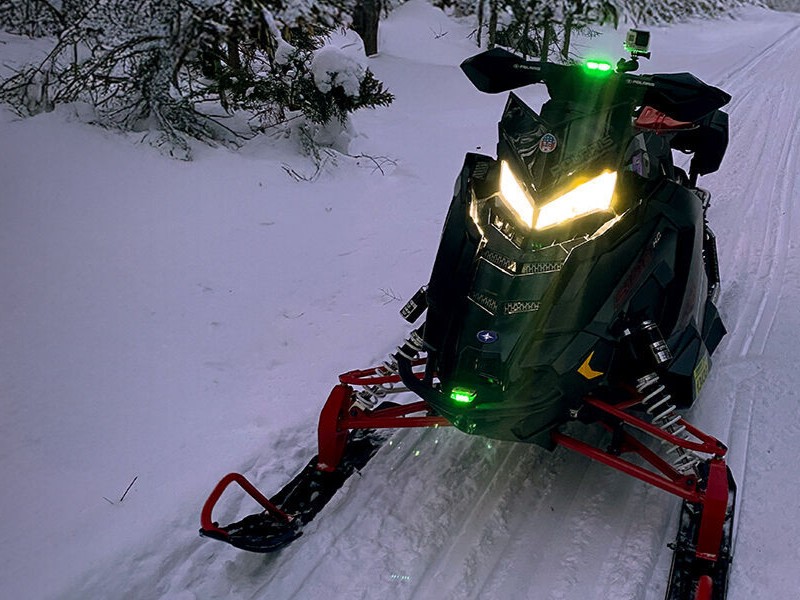
Lighting and Visibility
Good lighting makes the difference between being seen and being invisible. Check that your headlight, taillight, and brake light all work before leaving, and keep snow or ice cleared throughout the ride. Dim or dirty lenses drastically reduce your range of vision.
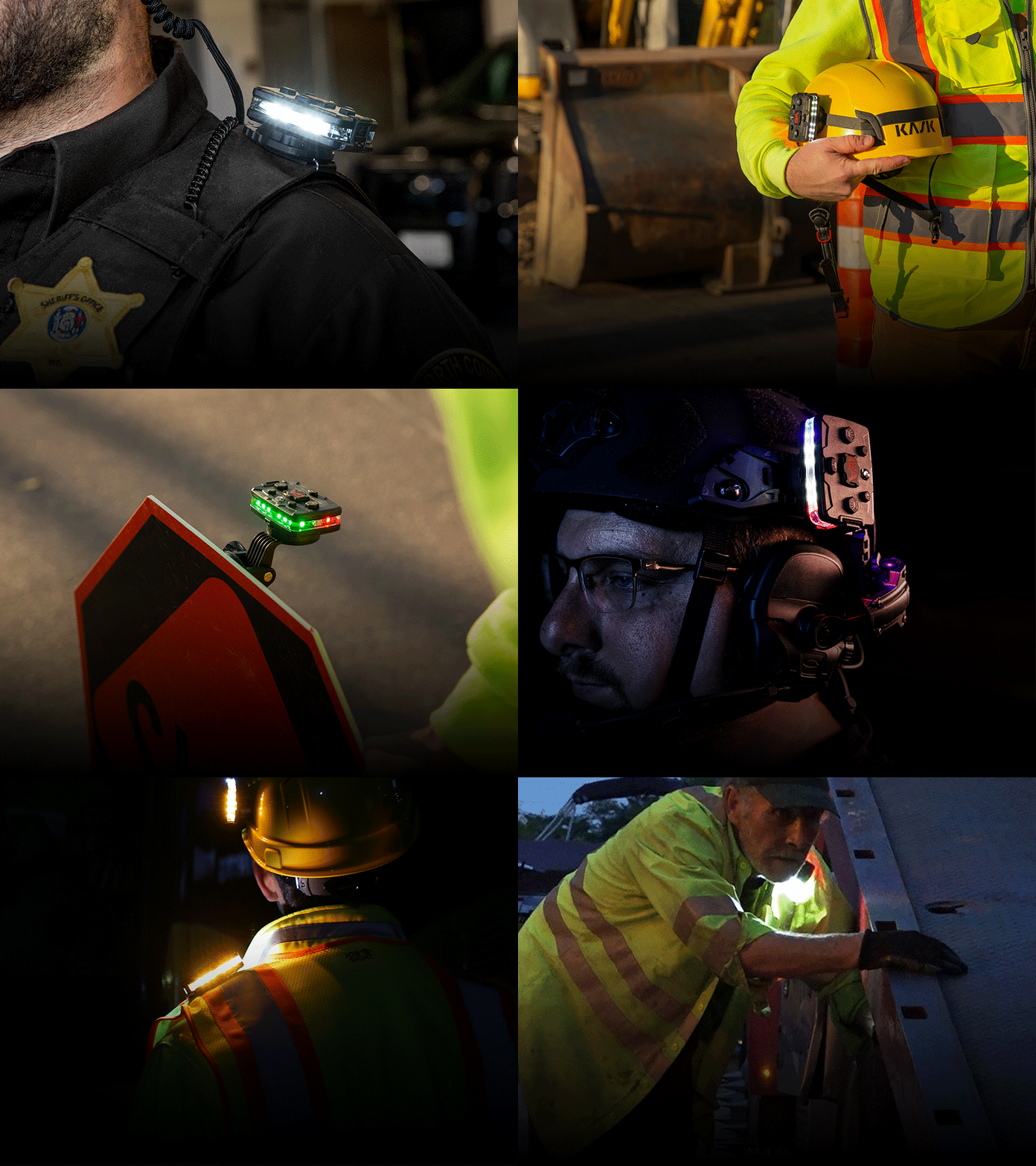
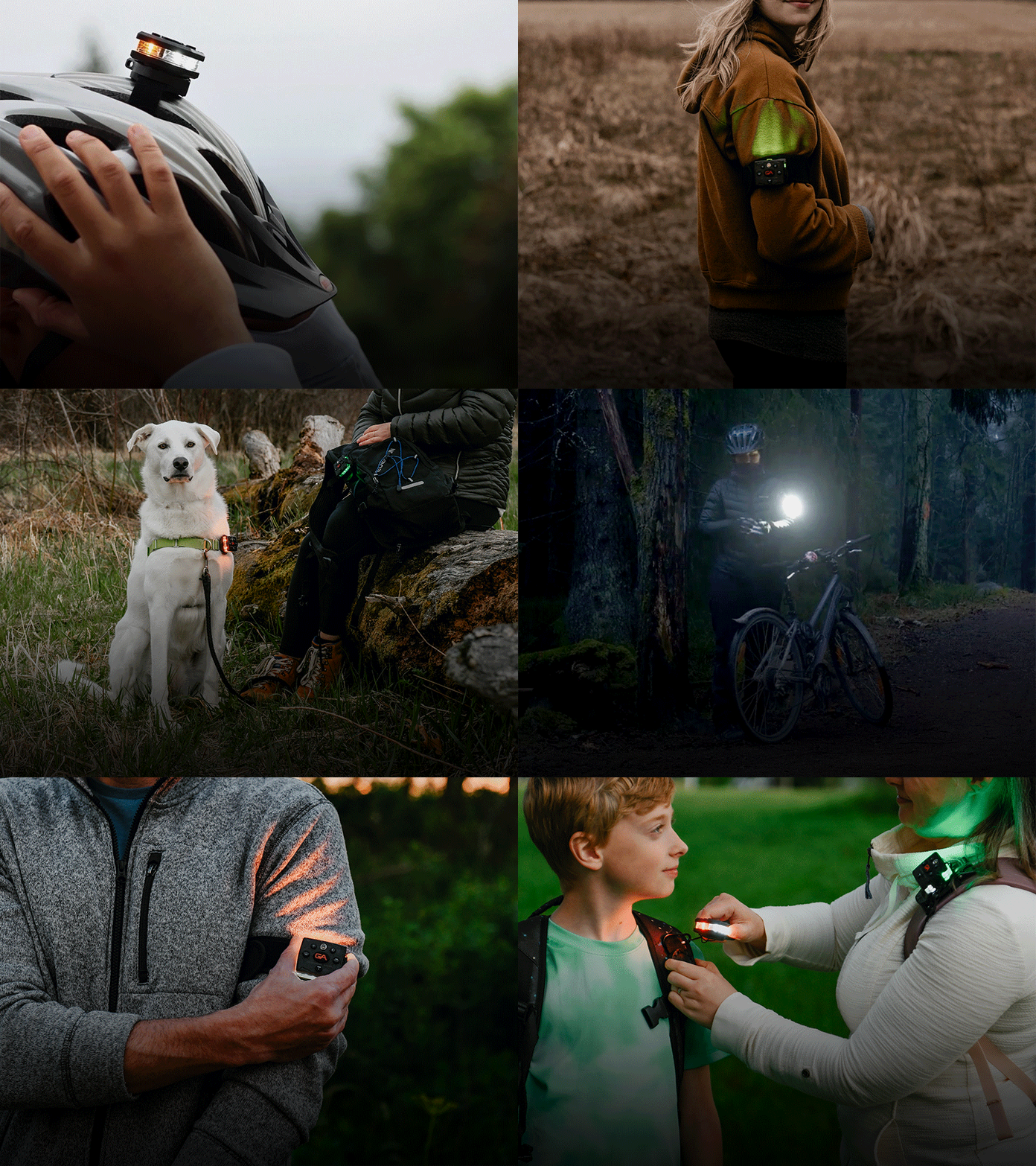
Adding wearable LED safety lights improves visibility for both you and others. Guardian Angel Elite™ and Micro™ Series are designed for riders who need dependable light sources that perform in cold conditions. Each model provides 360° visibility (up to 5+ miles for the Elite and 3+ miles for the compact Micro). Both are waterproof (IP68 rated) and rechargeable for all-weather dependability.
- Mount a light on your shoulder, helmet, or jacket to keep your hands free. This body-mounted position ensures that even if you’re off your sled after a fall, other riders can still see you.
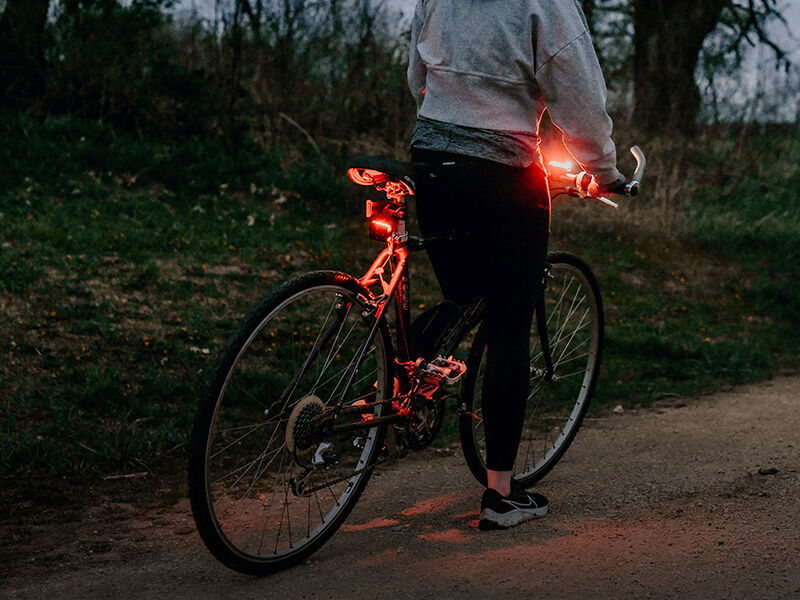
- Handlebar and windshield mounts provide another option. Available as magnetic or strap systems, they add a fixed point of light on your sled and make you easier to spot on narrow trails.
- For group travel, use white forward and red rear lights to mark direction, or attach an amber light to the side for added visibility in blowing snow.
These LED lights continue working reliably in freezing temperatures and recharge quickly through a USB-C connection.
Group Riding and Communication
Night riding should never be solo riding. Travel in pairs or small groups so help is always close. The lead rider sets the pace, and the last rider, called “the sweep,” makes sure nobody falls behind.
To stay coordinated on dark trails:
- Use bright identification lights. The lead and sweep riders should each wear a 360° light for quick recognition in the dark.
- Maintain safe spacing. Keep at least three seconds between sleds to reduce snow spray and allow clear sightlines.
- Rely on simple signals. Hand gestures or radio messages should be brief and clear: thumbs up, stop, or hazard ahead.
- Stop if you lose sight of someone. Visibility changes fast in darkness or blowing snow, so wait until every rider reappears.
- Check in often. At rest stops, count riders before moving again to prevent accidental separation.
Strong communication and disciplined spacing keep the group intact and reduce confusion on crowded or winding trails.
Cold Weather Preparation
Temperatures plunge quickly after sunset, and even a short stop can turn dangerous without proper gear. Dress for the coldest temperature you expect, not just the forecast at the trailhead. Wear a moisture-wicking base layer topped with an insulated shell that blocks wind. Heated grips, spare gloves, and a neck gaiter help keep you comfortable and alert.
Before heading out, double-check that you have:
- Emergency essentials: Tool kit, spare drive belt, tow strap, first-aid kit, and extra fuel.
- Thermal backups: Chemical hand warmers, extra gloves, and insulated face protection.
- High-energy supplies: Calorie-dense snacks and water to maintain warmth and focus.
- Rescue gear: A flashlight, whistle, and wearable LED safety light for emergency signaling.
- Navigation and comms: GPS device, map, and two-way radios or a satellite communicator.
Your Guardian Angel Elite™ or Micro™ light can act as both a visibility tool and an emergency beacon. Its rechargeable battery performs well in freezing conditions, and when the top LED is used by itself, it can run for up to a week on a single charge (depending on temperature), helping rescuers find you quickly in remote terrain.

Whiteouts and Other Emergencies
Whiteout conditions can appear without warning when wind and snow scatter headlight beams. Slow to a crawl or pull safely off the trail until visibility improves. Clear your vents before idling for warmth. Never run the motor in enclosed spaces.
If you’re stopped or dealing with a crash, place a Guardian Angel flashing light on or near the sled to alert oncoming riders. These compact snowmobile safety lights can run for hours in flashing mode, guiding others to your position even when your main lights are off.
When separated from your group, stay with your snowmobile, as it provides shelter and is easier for searchers to spot than a person alone in the snow. Use your 360° light in steady mode to make your position obvious.
Visibility and Preparation Keep You Safe
Snowmobiling at night demands special caution. Combining your sled’s factory lights with reliable lighting increases safety for every rider in the group. Guardian Angel snowmobile LED lights combine secure mounting and long-lasting power for reliable performance on winter trails.
With the right visibility and preparation, you can enjoy the quiet thrill of a winter trail long after the sun sets, and get home safely every time.