







As a college cyclist at night, you face a mix of annoyances, including but hardly limited to poorly lit paths, reckless cars near campus, and unpredictable traffic from pedestrians and scooters. But night cycling can be safe and enjoyable if you’re prepared.
With a few smart upgrades and the right gear, you can make every ride more visible and less stressful. Let’s go into what every student needs to know before riding a bicycle at night.
Helmet and Helmet-Mounted Lighting
Start with the most basic piece of safety gear: a properly fitted helmet that meets CPSC or ASTM standards. The straps should form a “V” under each ear, and the helmet shouldn’t shift when you shake your head. Adding a small helmet light helps you see where you’re looking instead of just where your handlebars point.
This simple step improves awareness on uneven paths and at intersections. Many rechargeable bicycle lights can be used in tandem with helmet straps that keep these devices securely in place.
Primary Bike Lights: Front and Rear
When riding a bike at night, your lights also help drivers see you. Follow these quick lighting tips:
- Use a steady front beam for visibility on lit streets; switch to high brightness on darker paths.
- Aim your beam about 20 feet ahead to avoid blinding oncoming traffic.
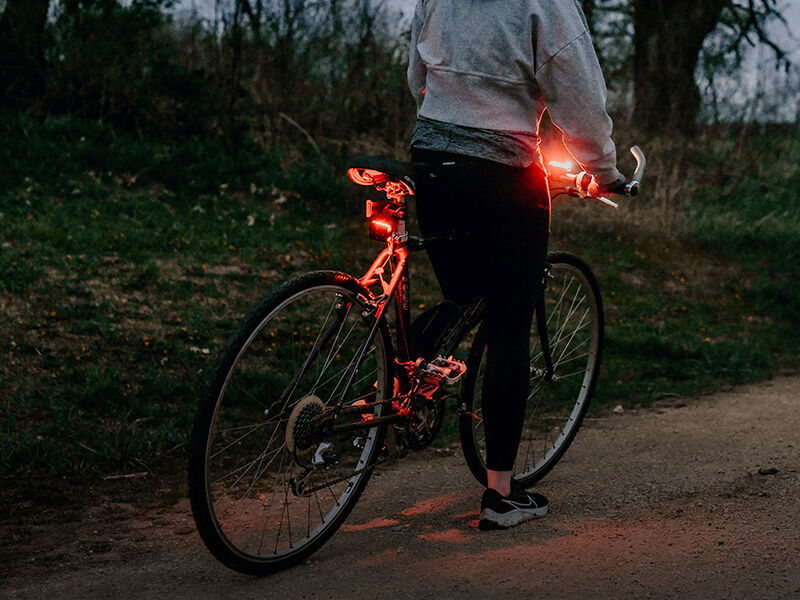
- Mount a wide-angle rear light on your seatpost or bag for visibility from multiple directions.
- Clean and charge your bicycle lights after every ride.
- Carry a small backup light in case your main unit runs low.
These basics define the best bike light setup for safe night cycling. Be sure to check your local laws for lighting requirements. Most areas require a white front light and red rear light after dark, and some restrict flashing front beams.
360° Visibility Tools
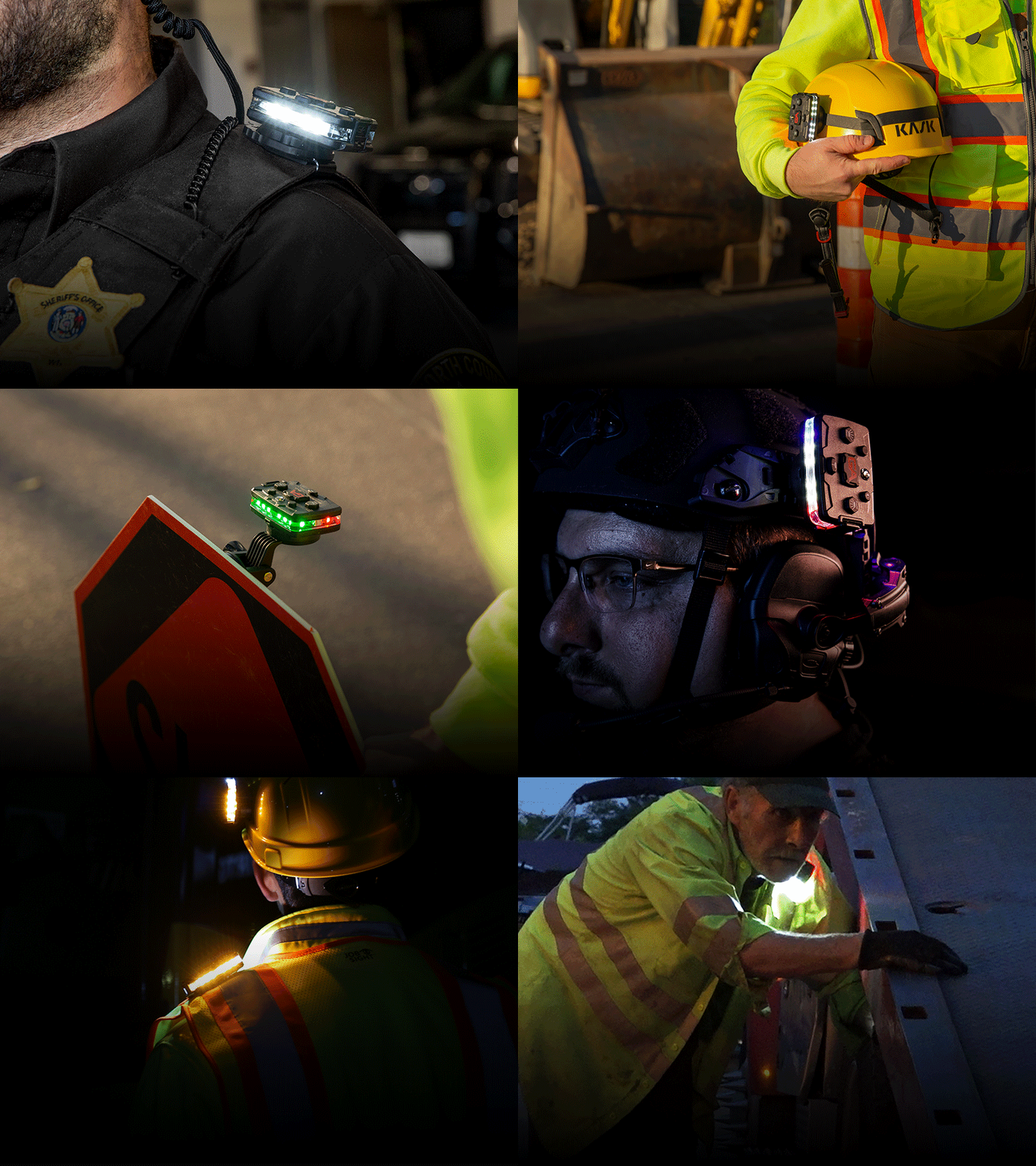
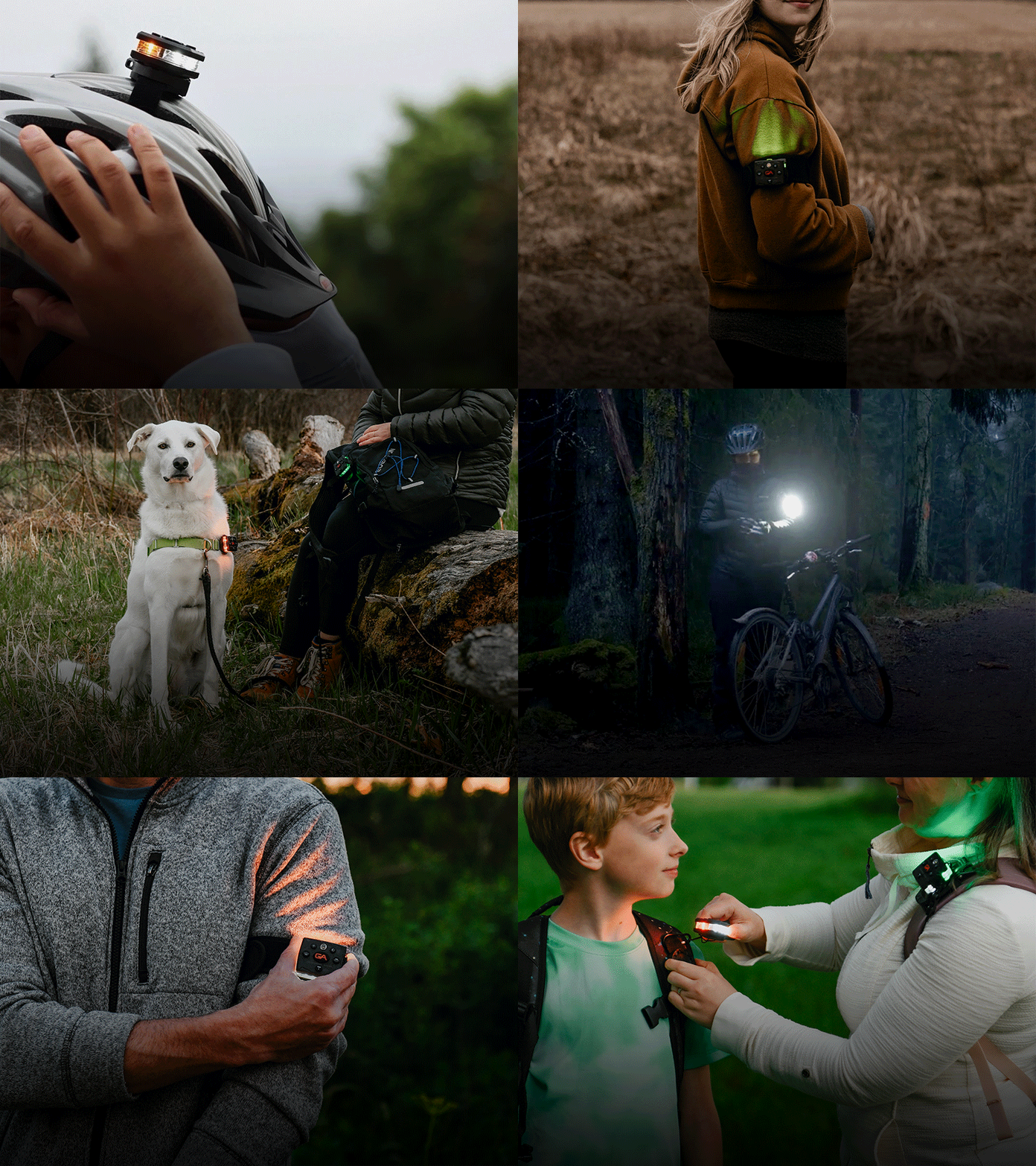
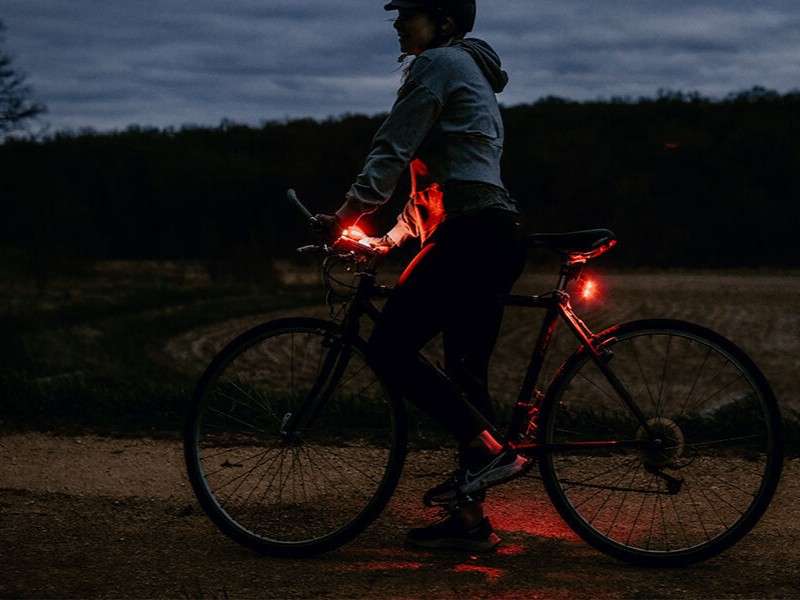
Bike-mounted lights cover the front and back, but most students overlook their sides. Lights positioned higher, on a backpack, helmet, or jacket, make you stand out at intersections and crosswalks. That’s where a wearable 360° option becomes invaluable.
Guardian Angel rechargeable bike lights offer bright illumination in all directions, and they clip easily onto clothing or handlebars. They’re ideal for night cycling across dim parking lots or weaving through crowded campus zones.
Reflective Apparel and Add-Ons
Boost your visibility from every angle with simple reflective upgrades:
- Reflective ankle bands or shoe clips create motion that drivers instantly notice.
- Helmet decals add extra shine from the sides.
- Gloves with reflective accents make hand signals stand out.
- Reflective jackets or backpacks keep you visible even when lights fade.
These quick additions make a cyclist at night far easier to spot from any direction.
E-Bike Tips for Night Riding
E-bikes make campus commuting faster, but they handle differently from traditional bikes. Because their motors add extra weight and instant power when you start pedaling, visibility matters even more when riding a bike at night. Keep these equipment-focused cycling safety tips for students in mind:
- Choose high-output lights. A brighter front beam helps offset faster speeds and longer braking distances.
- Double-check mounts. E-bikes vibrate more, so secure your headlight, taillight, and any wearable 360° lights before every ride. Guardian Angel lights are built to handle vibration and can be hard-mounted with included screws on most Guardian Angel mounts for extra security, with an optional device tether adding protection against drops or theft.
- Monitor your batteries. Charge both your e-bike and your rechargeable bicycle lights after each trip.
These steps can keep you visible and confident, no matter how late your next class or shift runs.
Sound and Signaling
A compact bell or handlebar chime helps when passing walkers or scooters. Use clear hand signals before every turn or lane change, and glance over your shoulder to confirm that drivers see you. At night, these gestures are even more important because they give others a cue before they spot your lights. Combine signaling with visible gloves or wristbands so movements stand out under headlights.
Routine Equipment Checks
Before every trip, do a quick “ABC” check:
- Air in tires
- Brakes working
- Chain lubricated and turning smoothly
Finish with a light check: are your front, rear, and wearable lights charged and secure? These small habits turn night cycling from a gamble into a routine.
Everyday Campus Use
When it comes to night rides on campus, you have to worry about more than just getting from Point A to Point B. You need to stay visible, including while walking your bike or crossing lots after dark.
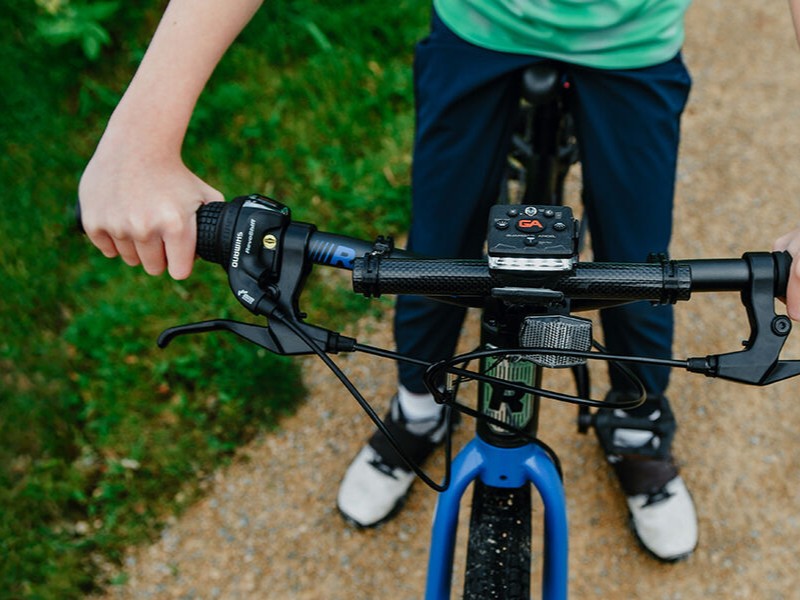
Guardian Angel wearable bike lights are perfect for these transitions, offering steady and flashing modes that make you visible on foot or on two wheels. The rechargeable units mount easily on backpacks or jackets, so you stay seen even after parking your bike.
Riding a bicycle at night doesn’t have to feel risky. With a layered approach (helmet and helmet light, front and rear beams, reflective gear, and a wearable 360° Guardian Angel light), you can handle dim campus roads confidently.